Innovative properties of CeO2 - ZrO2 nanostructures in energy production processes.
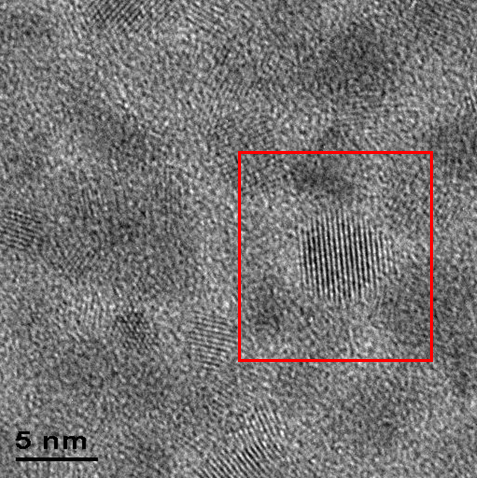
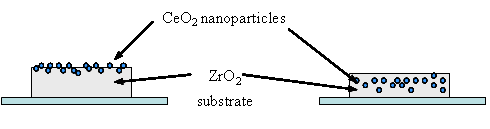
In recent years, a great effort has been put into the development of materials for energy production (SOFCs) and the conversion of automotive emissions into non toxic compounds. In this context, CeO2-based materials are widely employed thanks to their Oxygen Storage Capacity (OSC) and valuable redox properties, ascribed to the facile Ce(III) « Ce(IV) switching and to the capability of the fluorite-type ceria structure in accommodating oxygen deficiency. The main limitation of CeO2-based systems is represented by thermal ageing and deactivation induced by prolonged use at high temperatures. Accordingly, CeO2 has been replaced by mixed CeO2-ZrO2 systems, which feature an improved thermal stability and oxide-ion mobility, resulting, in turn, in better redox properties. Actually, catalytic performances are strictly dependent on the presence of noble metal particles such as Pt, Rh and Pd, that undergo sintering and are often released in automotive emissions. Such drawbacks can be successfully overcome by tailoring the dispersion of defective ceria nanoparticles in and/or on a zirconia matrix, allowing to exploit the synergy between defect content and high surface area nanosystems. At this regard, a peculiarity of ISTM CNR is the ability to combine Sol-Gel and Chemical Vapor Deposition (CVD) techniques (SG-CVD) in the design and synthesis of mixed ceria-zirconia films and, more generally, of oxide-based functional nanosystems (thin films, clusters, composites, functional surfaces). Such a bottom-up approach is a valuable tool to solve different problems in the field of nanotechnology, since its versatility allows to modify different chemical parameters (precursor nature, reaction path and environment) and process conditions in order to tailor material properties. Our approach is based on the Plasma-Assisted CVD (PA-CVD) synthesis of CeO2 nanoclusters (Fig. 1) on Sol-Gel ZrO2 xerogels, and on the modulation of the final product by ex-situ thermal treatments. In principle, such an approach allows to obtain materials ranging from composites, where CeO2 nanoparticles are dispersed in/on a ZrO2 matrix, to solid solutions, where a single Ce-O-Zr phase is obtained as a function of the synthesis conditions. A proper choice of processing parameters, together with the microporous structure of the ZrO2 matrix and the plasma effect assisting film growth, increase the dispersion of ceria particles and are responsible for the peculiar properties of such materials. In addition, ceria distribution on the host matrix can be tailored as a function of the treatment temperature thus allowing the switching between outside-clusters and inside-cluster systems (Fig. 2). The functional properties of the prepared nanosystems are directly dependent on the Ce(III)/Ce(IV) ratio as a function of the synthesis conditions. Such an effect allows noble metal elimination from such catalytic systems.
Immagini: